
Dentures
Dentures
Replace missing teeth with dentures

Missing multiple teeth can significantly impact your lifestyle, diet, and confidence. Since permanent teeth can’t regrow, modern dentures have become a standard dental restoration. These prosthetics, typically made from acrylic, various plastics, and porcelain for the crowns, have been a reliable solution since the early 20th century.
Types of Dentures
Dentures are fabricated based on the number of missing teeth you have.
Full dentures are made for completely edentulous (toothless) individuals
Partial dentures are made for those who still have a few healthy teeth left, but need to fill in the gaps.
Traditional Full Dentures
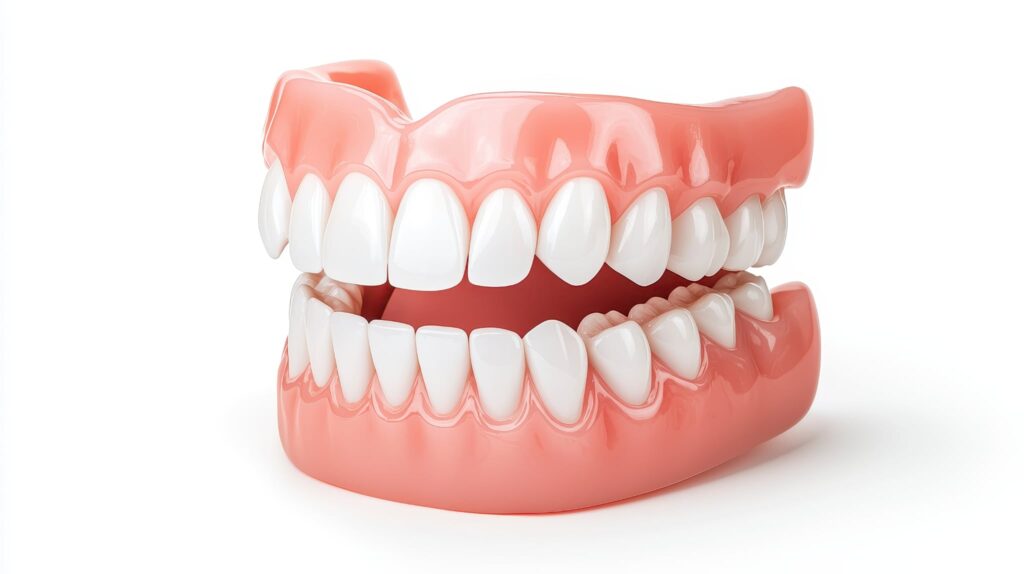
If you are already completely edentulous and you would like to get full dentures, traditional dentures may be an option. These are made to fit over your gums perfectly and provide good aesthetics and function.
Traditional full dentures are also available for patients who still have a few missing teeth but are planning to get them extracted. If you only have a couple of teeth left or your existing teeth are all damaged, your dentist may recommend that they be extracted and replaced with dentures.
Full Dentures
If you decide to go with the extraction of your remaining teeth the gums will be given a few months to heal. Impressions will then be taken during the healing phase, and the molds used to fabricate your new denture. It’s important to wait until healing is complete to ensure accurate size and fit of your denture. Once the dentures are ready, you will be called back for placement and any adjustments will be made to ensure a comfortable and proper fit.
Partial Dentures
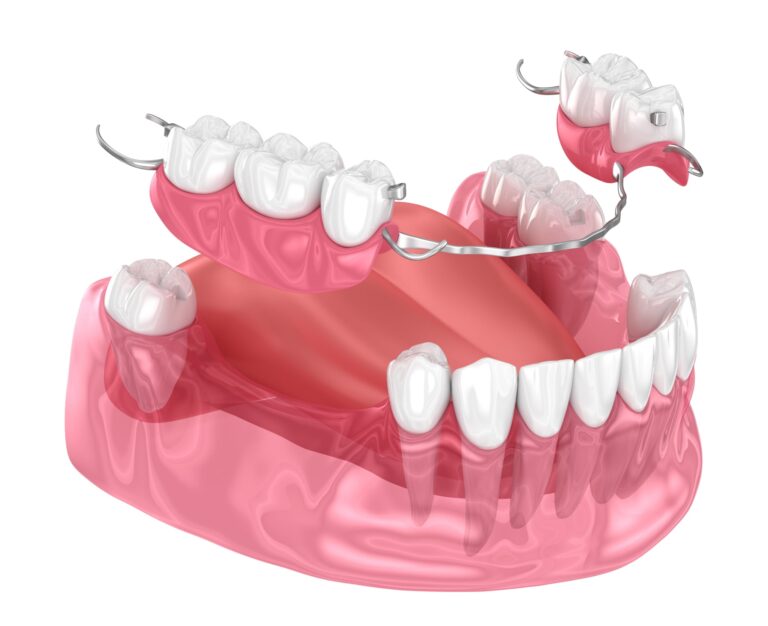
If you still have plenty of healthy teeth and you don’t want to get them extracted, you can opt for partial dentures. These are different than full dentures because their framework is made toaccommodate the existing teeth.
Some partial dentures have metal clasps that lock into your real teeth to stay in place, while others also have acrylic gum bases that allow them to fit over your real teeth. Our dentist Dr. Karanvir Sibia, DDS, will explain all possible options to help you decide what’s best for your current dental condition.
Benefits of Wearing Dentures
When you get dentures, you will be able to enjoy the following benefits:
Better Nutrition
Teeth are necessary for proper chewing and biting, as well as the formation of food bolus (a round piece of chewed food that is easy to swallow and digest). Having no or not enough teeth can make it difficult to eat and it may even force you to stay on a soft diet. You may miss out on essential nutrients and vitamins.
Clearer Speech
Many sounds require teeth for proper articulation, and without teeth, your speech may seem garbled and unclear. Dentures have the same physical structure as real teeth, and wearing them will allow you to talk clearly just like when you still had natural teeth.
Improved Self-Confidence
When you have missing teeth, you may feel insecure and afraid of talking, especially to people you’ve just met. It may be afraid of their judgment or ridicule. With dentures, you will be able to restore your confidence and social activity. You won’t be afraid to meet new people, and will be able to more fully enjoy the company of people in general.
Brighter Smile
our smile will look better than ever with well-fitting and natural-looking dentures. You can smile as wide as you want without feeling embarrassed.
Are There Alternatives to Dentures?
Yes, there are other available restorations for missing teeth, such as dental bridges and dental implants. Call us at (916) 772-0111 if you would like to know more about these dental restorations.
How Much Do Dentures Cost?
Like many other dental prosthetics, the prices of dentures vary depending on several factors, including:
Number of missing teeth
Location of dental office
Expertise of dental professional
Material used for the dentures
Type of dentures
Dental condition of the patient
You may discuss the pricing details with our dental staff once you come in for a consultation.